
 Business License

How to Find a Reliable Chinese Steel Supplier: A Buyer's Checklist
In 2024, a German machinery manufacturer signed a contract with a Chinese steel supplier that promised 30% savings on 316L stainless steel coils. The first shipment arrived on time. The second was two weeks late. The third contained coils with surface defects that had not appeared in the sample batch. When the buyer asked for replacement material, the supplier stopped responding.
This story is common. Finding a reliable Chinese steel supplier is not about luck. It is about knowing what to verify, which questions to ask, and how to spot the warning signs before you transfer payment.
In this guide, we explain how to identify a supplier you can trust, what documentation matters, and how to protect your business from quality and delivery failures.
Why Reliability Matters More Than Price
A low quote is attractive, but price alone is a poor predictor of a good sourcing experience. The real cost of an unreliable supplier includes production delays, rejected material, customs problems, and the time spent managing disputes.
A reliable Chinese steel supplier delivers:
Consistent material quality that matches your specifications
Clear documentation including mill test certificates
Stable lead times and transparent communication
Traceable mill origin through authorized distribution
Responsive after-sales support when issues arise
When you evaluate suppliers, think of the total cost of sourcing, not just the unit price. A supplier that costs 8% more but delivers certified material on schedule often saves money over a full year.
Where to Start Your Search for a Reliable Chinese Steel Supplier
Finding candidates is the first challenge. Most international buyers use a mix of sources.
Mill Directories and Authorizations
Start with the mills themselves. Major producers such as TISCO, Baosteel, and JISCO list authorized distributors on their websites or provide confirmation through their export departments. A supplier that cannot prove mill authorization should move down your list.
Industry Trade Shows and Visits
Events such as metal expos and steel industry conferences allow you to meet suppliers face to face. A brief conversation often reveals more about technical competence than a long email exchange. If you visit China, schedule facility tours in Wuxi, Shanghai, or Tianjin.
Referrals and Professional Networks
Ask other buyers in your industry for referrals. Procurement professionals in machinery, pressure vessel, and construction sectors often share supplier experiences. A referral is not a guarantee, but it reduces the number of unknowns.
Online Platforms with Caution
B2B platforms can help you identify suppliers quickly, but they do not verify quality or authorization. Treat platform listings as a starting point, not a final selection. Always complete independent verification before placing an order.
What Makes a Chinese Steel Supplier Reliable
Reliability comes from structure, not promises. The most dependable suppliers share several characteristics.
Direct Mill Relationships
A supplier with direct authorization from major mills can offer traceable materials and stable supply. Look for authorization letters from producers such as TISCO, Baosteel, JISCO, or Dongfang Special Steel. These documents should name the specific grades and regions covered.
In-House Quality Control
Reliable suppliers inspect material before shipment. They check surface finish, dimensions, flatness, edge condition, and packaging. They also have documented procedures for handling non-conforming material.
Export Experience
International buyers need more than material. They need export packing, customs documentation, and Incoterms clarity. A supplier with regular export experience understands these requirements and communicates them clearly.
Technical Competence
When you send a detailed specification, a capable supplier asks follow-up questions. They confirm tolerances, standards, surface finish, and application. Suppliers that accept vague requirements without clarification often lack the expertise to deliver correctly.
Track Record and Financial Stability
Established suppliers with a history of export orders are more likely to honor commitments. Ask how long they have served international buyers and which regions they ship to regularly. A supplier with stable warehousing, in-house processing, and long-term mill contracts is less likely to disappear when problems arise.
Step 1: Verify the Supplier's Business Credentials
Before discussing prices, confirm that the supplier is a legitimate business. Request these documents:
Business license with valid registration
Mill authorization certificates for the grades you need
ISO 9001 or equivalent quality management certification
Export license and customs registration
Sample mill test certificates from recent orders
Cross-check the business name and registration number against official records where possible. Make sure the mill named on the authorization certificate matches the mill named on the mill test certificate.
"In 2023, Jennifer, a procurement manager for a Canadian equipment builder, asked three Chinese suppliers for their business license and mill authorization. One supplier sent a blurry image of an expired certificate. Another refused, calling the request 'unnecessary.' The third provided clear scans and followed up with a reference letter from the mill. Jennifer placed a trial order with the third supplier. Two years later, they remain her primary source for stainless steel coils."
Step 2: Evaluate Communication and Transparency
Communication quality is one of the strongest early indicators of supplier reliability. Pay attention to these factors:
Response time to technical questions
Clarity of answers
Willingness to share documentation
Ability to explain material options
Honesty about limitations or lead times
A reliable Chinese steel supplier will tell you when a specification is unusual, when lead times are longer than normal, or when a grade is not available. A supplier that agrees to everything without questions may be hiding inexperience.
Step 3: Request Samples and Review Mill Test Certificates
Never place a large order based on a quote alone. Request material samples and review the mill test certificate carefully.
A proper MTC should include:
Heat number for traceability
Chemical composition
Mechanical test results
Mill name and production date
Grade and standard compliance
Dimensional data
Compare the sample to the MTC. If the sample does not match the certificate, or if the certificate is missing data, treat it as a serious warning sign.
Step 4: Check Quality Control Processes
Ask how the supplier inspects material before shipment. Reliable processes include:
Surface inspection for scratches, rust, and oil residue
Dimensional checks against tolerances
Edge condition and flatness verification
Packaging inspection for export suitability
Loading supervision to prevent damage
For critical applications, arrange third-party inspection by SGS, Bureau Veritas, or TUV. Independent inspection adds cost but provides strong protection against substandard material.
"When a Turkish pressure vessel fabricator ordered 60 tons of carbon steel plate, he hired a third-party inspector to visit the supplier's facility. The inspector found that two plates had thickness deviations outside the agreed tolerance. Because the issue was caught before shipment, the supplier corrected the order within four days. The fabricator avoided a customs rejection and a production delay."
Step 5: Confirm Logistics and Documentation Capability
Steel exports require precise documentation. A reliable supplier should provide:
Commercial invoice
Packing list
Bill of lading
Mill test certificate
Certificate of origin
Customs declaration
Discuss Incoterms clearly before order confirmation. Common terms for steel exports from China include FOB, CIF, and EXW. Each affects your cost, risk, and coordination workload. Make sure the supplier can package material properly for ocean freight.
Red Flags That Signal an Unreliable Supplier
Some warning signs appear early in the sourcing process. Watch for:
Prices far below market average without explanation
Refusal to share mill authorization or business documents
Pressure to pay 100% upfront before production
Inconsistent communication or long unexplained delays
MTCs that lack heat numbers or chemical composition
Reluctance to allow third-party inspection
Claims to represent every major mill without proof
If you encounter several of these signs, continue your search. A reliable Chinese steel supplier will not resist reasonable verification steps.
How to Structure Your First Order Safely
Your first order is a test, not a commitment. Design it to reveal how the supplier performs under real conditions.
Start with a Trial Order
Order a small quantity that represents your typical requirements. A 20-foot container or a small batch of coils is enough to evaluate quality, packaging, documentation, and delivery. The cost of a trial order is small compared to the risk of a failed large order.
Use Secure Payment Terms
Avoid paying 100% upfront on a first order. Common arrangements include a deposit with balance against copy of bill of lading, or payment through a letter of credit for larger amounts. As trust builds, payment terms can become more flexible.
Put Specifications in Writing
Your purchase order should include every detail: grade, dimensions, tolerances, surface finish, standards, quantity, packaging, Incoterms, delivery schedule, and required documents. The more specific your contract, the easier it is to enforce if material does not match.
Confirm Inspection Rights
Include the right to third-party inspection before shipment. A reliable Chinese steel supplier will accept this condition because they are confident in their quality control.
How Authorized Distributors Reduce Risk
Working with an authorized mill distributor offers several advantages over trading companies or unknown intermediaries.
Authorized distributors:
Source directly from partner mills with documented authorization
Hold inventory for faster lead times
Offer value-added processing such as slitting and cutting
Provide consistent documentation and traceability
Stand behind material quality with stronger accountability
At Wuxi Yansheng Technology, we operate as an authorized distributor of TISCO, Baosteel, JISCO, and Dongfang Special Steel. Our quality assurance processes and Wuxi processing center support international buyers who need certified materials with reliable delivery.
Building a Long-Term Relationship with Your Supplier
The most reliable sourcing relationships develop over time. Start with a trial order to test quality, packaging, documentation, and communication. Keep detailed records of specifications, certificates, and correspondence. Once you find a supplier that performs consistently, treat the relationship as a partnership.
Long-term benefits include:
Better pricing for recurring orders
Priority scheduling during busy periods
Faster response to custom requirements
Improved trust and communication
Lower total sourcing risk
Early notice of market changes or material availability
Over time, a reliable supplier learns your quality standards and delivery preferences. That familiarity reduces errors and speeds up future orders.
Conclusion
Finding a reliable Chinese steel supplier requires more than comparing quotes. It requires careful verification of credentials, documentation, quality control, and communication. The suppliers that earn long-term trust are transparent about their capabilities, responsive to your questions, and consistent in delivery.
By following the steps in this guide, you can reduce risk and build a supply chain that delivers certified steel on time. Whether you need stainless steel, carbon steel, silicon steel, copper, or aluminum, the right supplier becomes a strategic partner rather than a transaction.
The best time to verify a supplier is before you commit. The second-best time is during your first trial order. Use each interaction as a signal. Document everything. Ask the hard questions. The suppliers that answer clearly and consistently are the ones worth keeping.
At Wuxi Yansheng Technology, we help international buyers source certified metal materials from China through authorized mill distribution, in-house processing, and export logistics support. Contact our team to discuss your material requirements, request a quote, or arrange a sample evaluation.
Recently Posted
-
Import Steel From China: A Complete Buyer's Guide
July 30, 2026A manufacturing buyer in Germany found a Chinese supplier offering carbon steel plate at an attractive price. The quote looked com Read More
 -
Steel Mill Authorized Distributor: What It Means and Why It Matters
July 30, 2026A procurement manager in Poland received a quote for 50 tons of 304 stainless steel coil. The price was 12% lower than any other o Read More
 -
China Stainless Steel Exporter: How to Source and Verify Grades
July 30, 2026A food processing equipment builder in Mexico needed 20 tons of 316L stainless steel sheet with a 2B finish. His local distributor Read More
 -
How to Source Steel from China: A Complete Buyer's Guide
July 30, 2026In 2023, a procurement director in Texas placed a 50-ton stainless steel order based on a quote that was 18% below market average. Read More

Contact Us
Recommended Products
-
 EN 1.4006 410 Round Bar 15-150mm Martensitic Annealed Steam Turbine Blade BlankUS$ 1.5 - 1.8MOQ: 100 Kilograms
 -
Gas Distribution Lines Require C12200 Hard Temper Copper Pipe With Corrosion ResistanceUS$ 10 - 25MOQ: 100 Kilograms
-
DIN 1.4541 Stainless Sheet 4mm Pickled Finish Pipeline Pressure System Industrial Fabrication MaterialUS$ 1.6 - 2.6MOQ: 100 Kilograms
-
EN X6CrNiTi18-10 Stainless Plate 5mm Heat Exchanger Corrosion Resistant Industrial Equipment UseUS$ 1.75 - 2.5MOQ: 100 Kilograms
-
Copper Bonded Ground Rod 14.2mm x 2400mm Steel Core Earth Rod ASTM Standard for Electrical Grounding SystemUS$ 5 - 25MOQ: 100 Kilograms
-
DIN 1.4307 Stainless Steel Plate 5mm Pickled Finish Chemical Reactor Pressure Vessel Fabrication UseUS$ 1.85 - 4.15MOQ: 100 Kilograms
-
ASTM A276 416 Free-Machining Round Bar Dia 8-60mm Sulfurized High-Speed Auto-ScrewUS$ 1.65 - 1.85MOQ: 100 Kilograms
-
Nickel Alloy Strip Coil Tube Mill Feedstock Inconel 625 Incoloy 825 Welded Tube Raw MaterialUS$ 20 - 70MOQ: 100 Kilograms
-
JIS SUS329J4L Duplex Round Bar 25-80mm Chloride-Proof GCC Coastal InfrastructureUS$ 5.9 - 6.4MOQ: 100 Kilograms
-
JIS SUS303Se Round Bar Dia 8-50mm Selenium-Free-Cutting Auto-Lathe Optical HousingUS$ 3.6 - 3.9MOQ: 100 Kilograms
-
ASTM A564 630 17-4PH Round Bar Dia 20-100mm Condition H1025 Injection Mould InsertUS$ 4.9 - 5.4MOQ: 100 Kilograms
-
ASTM A276 304 Square Bar 6x6-100x100mm Cold Drawn Pickled Weld Frame ConstructionUS$ 1.65 - 2.85MOQ: 100 Kilograms
-
EN X2CrTi12 Stainless Plate 4mm Oxidation Resistant Vehicle Exhaust Industrial Fabrication UseUS$ 0.95 - 2.5MOQ: 100 Kilograms
-
Aluminium Round Tube Baby Crib Cot Bed Frame 6063 T5 Anodized Safety Diameter Wall Thickness FurnitureUS$ 2 - 5MOQ: 100 Kilograms
-
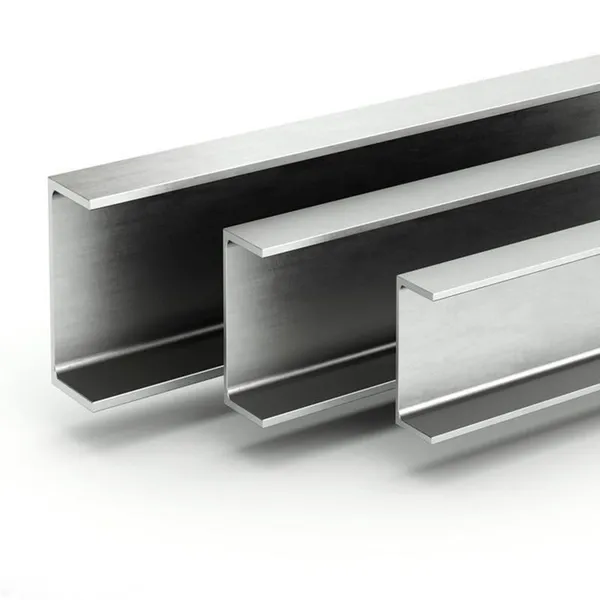
Welded Stainless Steel C Channel Bar 304 Grade Polished Surface for Architectural Decoration UseUS$ 1.65 - 2.85MOQ: 100 Kilograms
-
Round Aluminum Tubing Painting Easel Stand Leg 6063 T5 Anodized Lightweight Diameter Wall ThicknessUS$ 2 - 5MOQ: 100 Kilograms
-
Nickel Alloy Coil Strip Forging Billet Raw Material Inconel 718 Waspaloy Disc Forging StockUS$ 20 - 70MOQ: 100 Kilograms
-
Water Pump Motor Core Grade Non Oriented Silicon Steel Coil 50W470 Width 1000mm ASTM A683 StandardUS$ 0.5 - 1.5MOQ: 500 Kilograms
-
GOES Steel for Railway Electrification Transformer Networks 23Q110 High Efficiency Magnetic LaminationUS$ 0.5 - 4.5MOQ: 500 Kilograms
-
Silicon Steel for Wind Energy Power Conversion Transformers 30QG105 EN 10106 GOES Strip MaterialUS$ 0.5 - 4.5MOQ: 500 Kilograms