
 Business License
Blog Categories

How to Choose a Stainless Steel Grade: A Complete Guide
A procurement manager in Poland once ordered 304 stainless steel panels for a coastal food processing facility. The price was right, the lead time was short, and the supplier confirmed the grade. Eighteen months later, rust spots appeared around door frames and wash-down areas. The salt-laden air and daily chlorine cleaning had overwhelmed the 304 surface.
Choosing the wrong stainless steel grade can be expensive. Replacement, downtime, and rework often cost far more than selecting the right material from the start. This guide explains how to choose a stainless steel grade by matching the operating environment, mechanical needs, surface requirements, and budget to the correct alloy family.
At Wuxi Yansheng Technology, we supply 304, 316, duplex, and other stainless steel grades through authorized partnerships with major Chinese mills. If you already know your requirements, request a quote with your grade, size, finish, and quantity.
Start with the Operating Environment
The first step in selecting a stainless steel grade is understanding the conditions the material will face. Corrosion resistance depends on temperature, chemicals, chlorides, moisture, and mechanical stress.
Indoor vs. Outdoor Exposure
Indoor applications with controlled humidity and mild cleaning agents are usually well served by 304 stainless steel. Examples include kitchen equipment, office building trim, and general fabrication.
Outdoor exposure changes the calculation. Rain, salt spray, industrial fallout, and temperature swings place higher demands on the passive film. For coastal, marine, or heavily polluted environments, 316 stainless steel is often the safer starting point.
Chloride and Chemical Exposure
Chlorides are the most common cause of stainless steel corrosion. They are found in seawater, de-icing salts, swimming pool chemicals, and many industrial process fluids. Molybdenum improves resistance to chloride attack, which is why 316 stainless steel outperforms 304 in these environments.
For severe chloride service, duplex or super duplex grades may be necessary. These alloys combine high strength with strong pitting and crevice corrosion resistance.
Temperature and Pressure
High temperatures can reduce mechanical strength and change oxidation behavior. Some grades, such as 321 or 310, are stabilized or alloyed for elevated-temperature service. Cryogenic applications often favor austenitic grades like 304 and 316 because they retain toughness at low temperatures.
Pressure-containing equipment must also meet specific code requirements. Always verify that the selected grade and condition satisfy the design standard for your vessel, pipe, or structure.
Understand the Major Stainless Steel Families
Stainless steels are grouped into families based on their microstructure. Each family has different strengths, weaknesses, and typical uses.
Austenitic Stainless Steels
Austenitic grades are the most widely used stainless steels. They contain chromium and nickel, which give them excellent corrosion resistance, formability, and weldability. The most common grades are 304 and 316.
304 stainless steel: Good general corrosion resistance, excellent formability, lower cost. Suitable for indoor, freshwater, and mild chemical environments.
316 stainless steel: Contains 2-3% molybdenum for improved chloride resistance. Preferred for marine, chemical, pharmaceutical, and food processing applications.
316L stainless steel: Low-carbon version of 316. Reduces sensitization risk in welded structures.
For a direct comparison, see our guide on 304 vs 316 stainless steel.
Ferritic Stainless Steels
Ferritic grades contain chromium but little or no nickel. They are magnetic, generally less expensive, and offer good resistance to stress corrosion cracking. Common grades include 430 and 409.
These grades are often used in automotive exhaust systems, appliances, and decorative trim. They are less formable and less corrosion resistant than austenitic grades in aggressive environments.
Martensitic Stainless Steels
Martensitic grades can be hardened by heat treatment. They offer high strength and wear resistance but lower corrosion resistance than austenitic grades. Grade 410 is a common example.
Applications include cutlery, surgical instruments, valves, and pump components where hardness and wear resistance matter more than general corrosion resistance.
Duplex Stainless Steels
Duplex grades, such as 2205 and 2507, combine austenitic and ferritic structures. They offer higher strength and better resistance to chloride stress corrosion cracking than 316. They are used in chemical processing, seawater systems, and oil and gas equipment.
The higher strength of duplex grades allows thinner sections and weight savings. However, they require more careful fabrication and welding than austenitic grades.
Match the Stainless Steel Grade to the Application
Once you understand the environment and alloy families, match the grade to the specific application. Here are common selection guidelines.
Food and Pharmaceutical Equipment
Food processing and pharmaceutical systems need cleanable surfaces and corrosion resistance. 316 or 316L stainless steel is the standard for equipment exposed to salt, acids, or aggressive cleaning chemicals.
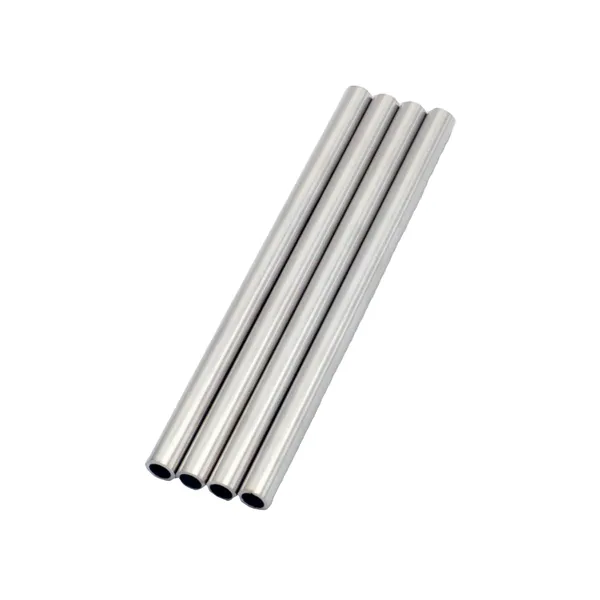
Surface finish is also critical. BA (Bright Annealed) or EP (Electropolished) finishes reduce surface roughness and make cleaning easier. Our stainless steel pipe is available in 316L with BA or EP finishes for sanitary systems.
Marine and Coastal Applications
Saltwater and salt spray are highly aggressive. 316 stainless steel is usually the minimum grade for marine hardware, railings, and fittings. For propeller shafts, pumps, and subsea equipment, duplex grades are often preferred.
Chemical and Petrochemical Equipment
Chemical plants require grades matched to specific process fluids. 316L handles many mild acids and chlorides. More aggressive conditions may require 904L, duplex 2205, or super duplex 2507. Always consult corrosion data for the specific chemical, concentration, and temperature.
Architectural and Decorative Applications
For building facades, handrails, and interior design, appearance and formability matter. 304 stainless steel is widely used indoors. Outdoor or coastal architectural projects may require 316 to prevent tea staining and pitting.
Surface finish options such as 2B, hairline, mirror, and brushed affect both appearance and maintenance. You can learn more in our stainless steel surface finishes guide.
Structural and Machinery Applications
For machinery frames, brackets, and structural parts, strength and cost often drive selection. 304 provides a good balance for many fabricated assemblies. Where higher strength or severe corrosion resistance is needed, consider 316 or duplex grades.
Consider Mechanical Properties
Corrosion resistance is important, but it is not the only factor. The grade must also meet mechanical requirements.
Strength and Hardness
Austenitic grades are relatively soft and easy to form. Duplex grades offer roughly twice the yield strength of 316, allowing thinner sections. Martensitic grades can be heat treated for high hardness.
Formability and Weldability
304 is more formable than 316, which is one reason it is preferred for deep drawing and complex shapes. 316 and 316L weld very well, especially when using matching filler metal. Duplex grades require controlled heat input during welding to preserve their two-phase structure.
Machinability
Some grades, particularly 303 and certain free-machining variants, are easier to machine. However, free-machining grades often sacrifice corrosion resistance. For high-corrosion applications, standard 304 or 316 may be preferable despite slower machining.
Factor in Surface Finish and Form
The grade and the finish work together. A highly corrosion-resistant grade with a rough or contaminated surface can still fail prematurely.
Common Surface Finishes
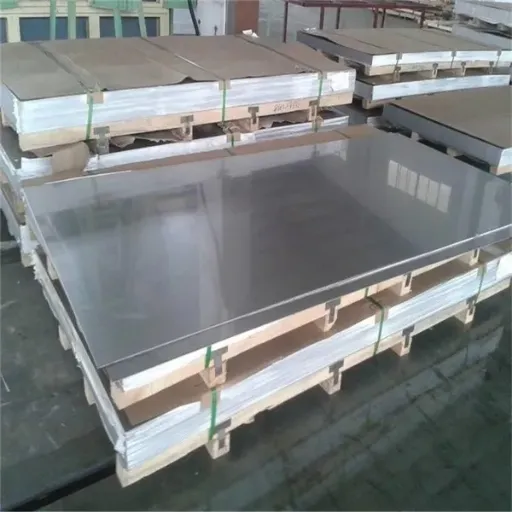
No. 1 / Hot rolled finish: Rough surface, often used for structural plates and applications where appearance is not critical.
2B finish: Smooth, reflective, cold-rolled finish. Common for fabrication and general use.
BA finish: Bright, smooth surface produced under controlled atmosphere. Used for decorative and sanitary applications.
EP finish: Electropolished surface with very low roughness. Preferred for pharmaceutical and semiconductor systems.
Form and Processing
Stainless steel is available as sheet, plate, coil, pipe, bar, and custom-processed parts. The form affects cost, lead time, and downstream processing. Our custom processing services include slitting, leveling, cutting, polishing, and surface treatment to bring materials closer to production-ready condition.
Verify Standards and Certification
A grade name alone is not enough. Buyers should confirm the standard and request documentation.
Common Standards
ASTM A240: Standard for flat-rolled stainless steel plate, sheet, and strip.
ASTM A276: Standard for stainless steel bars and shapes.
ASTM A312: Standard for seamless and welded stainless steel pipe.
ASTM A554: Standard for welded stainless steel mechanical tubing.
You can view the ASTM A240 standard for detailed requirements on flat-rolled stainless steel.
Mill Test Certificates
Always request a mill test certificate (MTC) showing chemical composition, mechanical properties, heat number, and mill origin. The MTC is the most important document for verifying that the material matches your specification.
For critical applications, third-party inspection by agencies such as SGS, BV, or Lloyd's Register adds another layer of confidence. Our quality assurance team verifies standard compliance and provides traceable documentation with every shipment.
Balance Initial Cost with Lifecycle Value
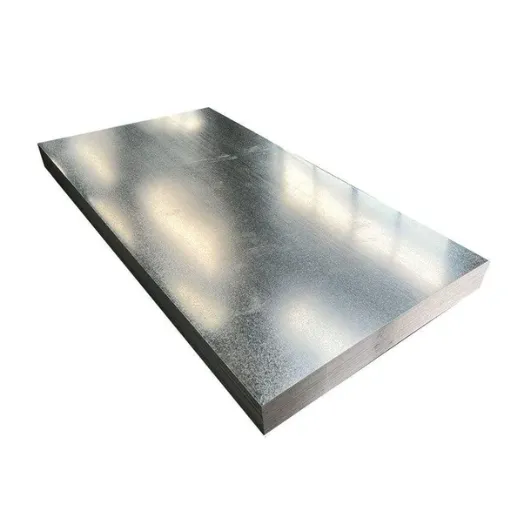
It is tempting to choose the lowest-priced grade, but initial material cost is only part of the total cost.
Total Cost of Ownership
A lower-grade material may save money at purchase but require more maintenance, cleaning, or replacement over time. For example, 304 in a saltwater environment may need frequent polishing and early replacement, while 316 often lasts years longer with basic care.
Cost Differences Between Grades
316 stainless steel typically costs more than 304 because it contains more nickel and molybdenum. Duplex grades are more expensive than 316 but can reduce material thickness due to higher strength. Super austenitic and super duplex grades are premium materials reserved for the most demanding conditions.
When evaluating cost, consider service life, maintenance, downtime, and the consequences of failure. In aggressive environments, the more corrosion-resistant grade usually wins on lifecycle cost.
Use a Simple Decision Framework
If you are unsure how to choose a stainless steel grade, work through these questions in order.
What chemicals, chlorides, or moisture will the material contact?
What is the operating temperature and pressure?
Is the application indoors, outdoors, marine, or industrial?
What mechanical properties are required: strength, formability, hardness, or machinability?
What surface finish and cleanliness level does the application demand?
Which standards and certifications must the material meet?
What is the budget over the full service life, not just the purchase price?
Answering these questions narrows the field quickly. A food tank in a mild environment might be 304 with a 2B finish. A coastal chemical tank might be 316L or duplex with pickled and passivated surfaces.
Common Mistakes When Choosing a Stainless Steel Grade
Even experienced buyers make mistakes. Here are the most common errors to avoid.
Choosing 304 for continuous saltwater or chloride exposure
Ignoring the effect of surface finish on corrosion resistance
Selecting a grade without checking the relevant ASTM or EN standard
Forgetting to specify low-carbon 316L for welded assemblies
Mixing dissimilar metals without isolation, creating galvanic corrosion
Skipping passivation after fabrication or welding
Buying from suppliers who cannot provide mill test certificates
Selecting based only on initial price instead of lifecycle cost
A machinery builder in Turkey learned this lesson when he specified 304 for frames in a fertilizer plant. The ammonium nitrate dust in the air attacked the surface within two years. Switching to 316L with periodic cleaning extended service life to over eight years.
When to Get Expert Help
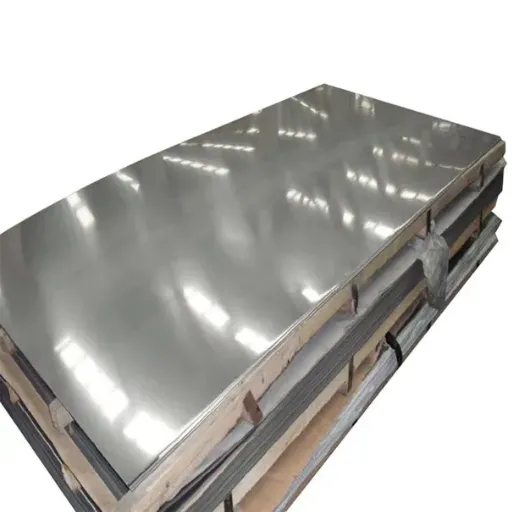
Some applications are straightforward. Others require corrosion engineering input or code compliance review. Consider involving a materials engineer or experienced supplier when:
The environment contains strong acids, chlorides, or unknown chemicals
The part operates at high temperature or high pressure
Failure could cause safety, environmental, or major financial impact
The design code requires specific grade certification
You are switching from carbon steel to stainless steel for the first time
Wuxi Yansheng Technology supports buyers through grade selection, standard verification, and processing recommendations. We supply stainless steel sheet and coil, pipe, and custom-processed parts from our Wuxi processing center.
Conclusion
Learning how to choose a stainless steel grade means balancing environment, mechanics, finish, standards, and cost. The right grade saves money, extends service life, and reduces maintenance. The wrong grade creates corrosion problems that are expensive to fix.
Key takeaways:
Start with the operating environment: temperature, chemicals, chlorides, and moisture
Understand the major families: austenitic, ferritic, martensitic, and duplex
Match the grade to the application: 304 for mild service, 316 for chlorides, duplex for severe service
Do not ignore surface finish and fabrication effects on corrosion resistance
Verify standards and request mill test certificates
Compare lifecycle cost, not just purchase price
Ask for expert input when failure would be costly
Wuxi Yansheng Technology supplies certified stainless steel grades and custom processing services from our Wuxi processing center. We help buyers match the right stainless steel grade to their application.
Need help selecting a grade? Request a quote with your application details, and our technical team will recommend the right stainless steel grade for your project.
Recently Posted
-
4140 Alloy Steel Bar for Hydraulic Cylinder Rods: Induction Hardening, Chrome Plating & Fatigue Life
September 1, 2026A hydraulic cylinder manufacturer in Europe was dealing with a persistent warranty problem: piston rods on its medium-duty cylinde Read More
 -
Alloy Steel Bar Procurement Guide: Mill Test Certificates, Hardenability Testing & Traceability Requ
August 31, 2026A gear manufacturer in South America ordered 60 tons of 8620 bar for a run of transmission gears. The supplier delivered material Read More
 -
Steel Bar Surface Defects: Laps, Seams, Decarburization & Slag Inclusions — Detection Methods & Acce
August 28, 2026A fastener manufacturer in Eastern Europe received a batch of cold-heading quality wire rod and drew it into bolts without inspect Read More
 -
4140 Alloy Steel vs 1045 Carbon Steel Bar: Strength, Hardenability & When the Upgrade Pays Off
August 27, 2026A conveyor equipment builder in Southeast Asia switched a line of drive shafts from 1045 to a cheaper steel in an effort to trim m Read More

Contact Us
Recommended Products
-
 EN 1.4006 410 Round Bar 15-150mm Martensitic Annealed Steam Turbine Blade BlankUS$ 1.5 - 1.8MOQ: 100 Kilograms
 -
Gas Distribution Lines Require C12200 Hard Temper Copper Pipe With Corrosion ResistanceUS$ 10 - 25MOQ: 100 Kilograms
-
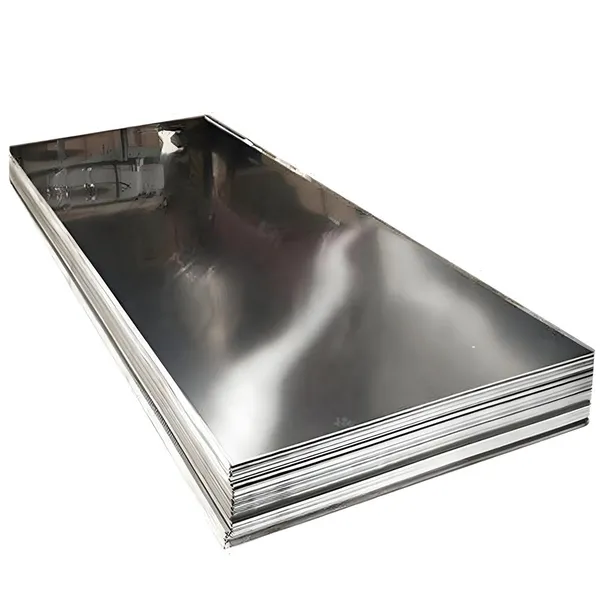
DIN 1.4541 Stainless Sheet 4mm Pickled Finish Pipeline Pressure System Industrial Fabrication MaterialUS$ 1.6 - 2.6MOQ: 100 Kilograms
-
EN X6CrNiTi18-10 Stainless Plate 5mm Heat Exchanger Corrosion Resistant Industrial Equipment UseUS$ 1.75 - 2.5MOQ: 100 Kilograms
-
Copper Bonded Ground Rod 14.2mm x 2400mm Steel Core Earth Rod ASTM Standard for Electrical Grounding SystemUS$ 5 - 25MOQ: 100 Kilograms

-
DIN 1.4307 Stainless Steel Plate 5mm Pickled Finish Chemical Reactor Pressure Vessel Fabrication UseUS$ 1.85 - 4.15MOQ: 100 Kilograms
-
ASTM A276 416 Free-Machining Round Bar Dia 8-60mm Sulfurized High-Speed Auto-ScrewUS$ 1.65 - 1.85MOQ: 100 Kilograms
-
Nickel Alloy Strip Coil Tube Mill Feedstock Inconel 625 Incoloy 825 Welded Tube Raw MaterialUS$ 20 - 70MOQ: 100 Kilograms
-
JIS SUS329J4L Duplex Round Bar 25-80mm Chloride-Proof GCC Coastal InfrastructureUS$ 5.9 - 6.4MOQ: 100 Kilograms
-
JIS SUS303Se Round Bar Dia 8-50mm Selenium-Free-Cutting Auto-Lathe Optical HousingUS$ 3.6 - 3.9MOQ: 100 Kilograms
-
ASTM A564 630 17-4PH Round Bar Dia 20-100mm Condition H1025 Injection Mould InsertUS$ 4.9 - 5.4MOQ: 100 Kilograms
-
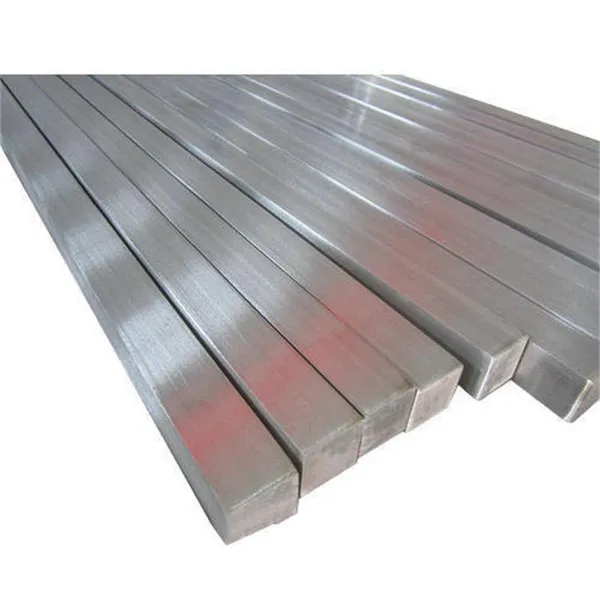
ASTM A276 304 Square Bar 6x6-100x100mm Cold Drawn Pickled Weld Frame ConstructionUS$ 1.65 - 2.85MOQ: 100 Kilograms
-
EN X2CrTi12 Stainless Plate 4mm Oxidation Resistant Vehicle Exhaust Industrial Fabrication UseUS$ 0.95 - 2.5MOQ: 100 Kilograms
-
Aluminium Round Tube Baby Crib Cot Bed Frame 6063 T5 Anodized Safety Diameter Wall Thickness FurnitureUS$ 2 - 5MOQ: 100 Kilograms
-
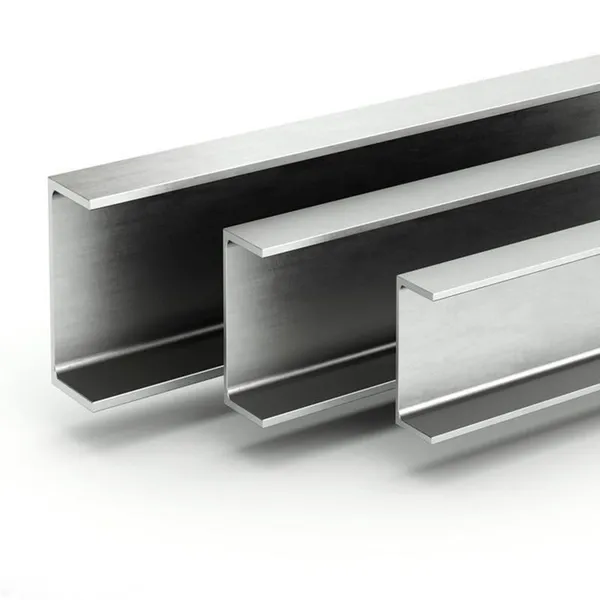
Welded Stainless Steel C Channel Bar 304 Grade Polished Surface for Architectural Decoration UseUS$ 1.65 - 2.85MOQ: 100 Kilograms
-
Round Aluminum Tubing Painting Easel Stand Leg 6063 T5 Anodized Lightweight Diameter Wall ThicknessUS$ 2 - 5MOQ: 100 Kilograms
-
Nickel Alloy Coil Strip Forging Billet Raw Material Inconel 718 Waspaloy Disc Forging StockUS$ 20 - 70MOQ: 100 Kilograms
-
Water Pump Motor Core Grade Non Oriented Silicon Steel Coil 50W470 Width 1000mm ASTM A683 StandardUS$ 0.5 - 1.5MOQ: 500 Kilograms
-
GOES Steel for Railway Electrification Transformer Networks 23Q110 High Efficiency Magnetic LaminationUS$ 0.5 - 4.5MOQ: 500 Kilograms
-
Silicon Steel for Wind Energy Power Conversion Transformers 30QG105 EN 10106 GOES Strip MaterialUS$ 0.5 - 4.5MOQ: 500 Kilograms