
 Business License
Blog Categories

Stainless Steel Pipe for the Chemical Industry: What to Specify
A process engineer at a German specialty chemical plant watched his 304 stainless steel pipe develop pinhole leaks after only 18 months of service. The process stream contained low levels of chlorides, and the pipe had a standard mill finish. The unplanned shutdown cost the plant three days of production and forced a complete replacement of 120 meters of line.
That failure illustrates why selecting the right stainless steel pipe for the chemical industry isn't a simple catalog decision. The correct grade, wall thickness, surface finish, and documentation must match the chemicals, temperatures, and cleaning cycles of the process. In this guide, we will explain which grades perform best, when seamless or welded pipe is the better choice, and how to verify that your pipe will last.
Wuxi Yansheng Technology supplies 304, 316/L, 316Ti, and duplex stainless steel pipe for chemical, pharmaceutical, and petrochemical applications. Our materials come from authorized Chinese mills and include full mill test certificates and optional third-party inspection.
Why the Chemical Industry Relies on Stainless Steel Pipe
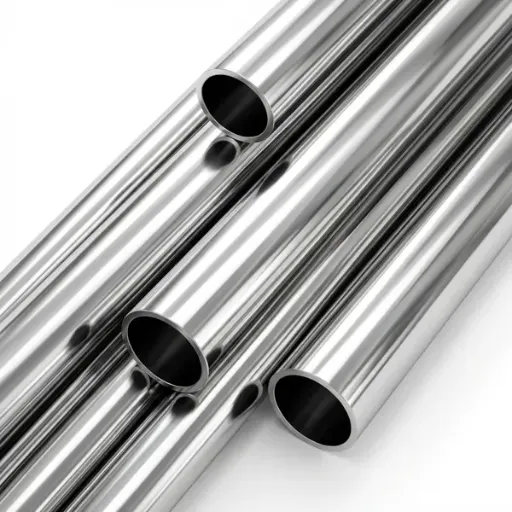
Chemical plants move aggressive fluids under pressure and temperature. Carbon steel corrodes quickly in acidic or chloride-rich environments, while lined or plastic pipe may fail under high temperature or mechanical stress. Stainless steel pipe offers a combination of corrosion resistance, mechanical strength, and cleanability that is hard to match.
Austenitic grades such as 304 and 316 form a passive chromium oxide layer that resists many acids, alkalis, and oxidizing agents. The molybdenum in 316 and 316L extends that protection into chloride-bearing media. Duplex grades add higher strength and better resistance to stress corrosion cracking for severe duties.
Beyond corrosion resistance, stainless steel pipe is easy to clean and inspect. Smooth surfaces, such as BA or EP finishes, reduce sites where bacteria or chemical residues can accumulate. That is why stainless steel pipe is the default choice for critical chemical process lines, not just a premium option.
Which Stainless Steel Grades Perform Best in Chemical Service
Grade selection starts with the process fluid. A pipe that works in one chemical stream may fail in another, even at the same nominal temperature.
304 and 304L Stainless Steel Pipe
304 is the baseline austenitic grade. It resists atmospheric corrosion, many organic chemicals, and mildly oxidizing acids. For processes without chlorides or strong acids, 304 pipe is cost-effective and widely available.
304L is the low-carbon version. It is the safer choice when welds will be exposed to sensitizing temperatures. However, 304 isn't suitable for chloride-rich environments where pitting or crevice corrosion can occur.
316 and 316L Stainless Steel Pipe
316 contains 2-3% molybdenum, which dramatically improves resistance to chlorides and reducing acids. 316L is the welded-process favorite because its low carbon content reduces the risk of intergranular corrosion after welding.
For most chemical applications involving salts, solvents, sulfuric acid, or coastal humidity, 316L stainless steel pipe is the practical minimum. If you are comparing grades, our 304 vs 316 stainless steel guide breaks down the chemistry and cost differences.
316Ti and Duplex 2205
316Ti adds titanium stabilization for applications with repeated thermal cycling. It resists sensitization better than standard 316 in high-temperature service.
Duplex 2205 combines austenitic and ferritic microstructures. It offers roughly twice the yield strength of 316L and superior resistance to chloride stress corrosion cracking. It is often used in offshore, desalination, and aggressive chemical environments where 316L would be marginal.
| Grade | Best For | Chloride Resistance | Typical Max Service Temp |
|---|---|---|---|
| 304/304L | Mild chemicals, atmospheric, low-chloride | Moderate | 400°C (750°F) |
| 316/316L | General chemical, chlorides, welded systems | High | 400°C (750°F) |
| 316Ti | Thermal cycling, high-temperature service | High | 450°C (840°F) |
| 2205 | Severe chlorides, sour service, high strength | Very high | 300°C (570°F) |
For a deeper comparison of corrosion-resistant options, see our article on corrosion-resistant stainless steel grades.
Seamless vs. Welded Stainless Steel Pipe for Chemical Applications
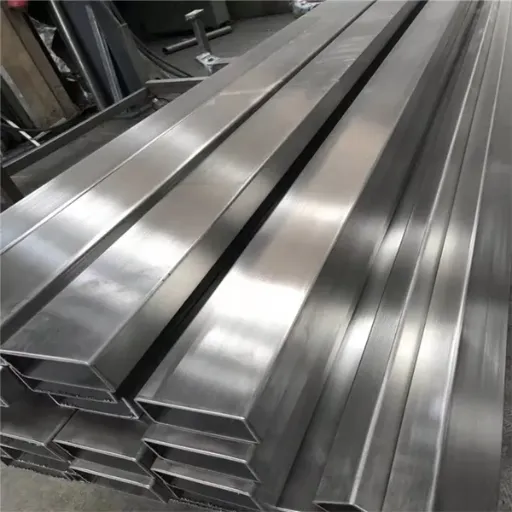
The manufacturing method affects strength, corrosion behavior, and cost.
Seamless Pipe
Seamless pipe is produced by piercing or extruding a solid billet. It has no longitudinal weld seam, so it is stronger in high-pressure service and more uniform in corrosion resistance. Seamless pipe is preferred for high-pressure reactors, heat exchanger tubes, and critical process lines.
The trade-off is cost. Seamless 316L pipe typically costs more than welded pipe and may have longer lead times for non-standard sizes.
Welded Pipe
Welded pipe is formed from coil or plate and joined by automatic welding. Modern TIG and laser welding produce seams that are nearly indistinguishable from the base metal. Welded pipe is cost-effective for lower-pressure lines, large diameters, and structural support.
The heat-affected zone near the weld can be slightly less corrosion resistant. For aggressive service, specify that welds are pickled and passivated to restore the passive layer.
A Brazilian chemical distributor needed 80 meters of 2-inch 316L seamless pipe for a pressure reactor. A local trader quoted a low price but could not supply mill certificates. Switching to an authorized Wuxi supplier delivered the pipe in two weeks with ASTM A312 compliance and full traceability. The reactor passed third-party inspection on the first attempt.
Pipe Schedule and Wall Thickness for Chemical Systems
Wall thickness is just as important as grade. A pipe that resists corrosion perfectly can still fail if it can't handle the internal pressure, external loads, or thermal stress of the system.
How Schedule Numbers Work
Pipe schedule is a shorthand for wall thickness. Schedule 40 is the standard wall for many process applications. Schedule 80 has a thicker wall and higher pressure rating. Higher schedules such as 160 or XXS are used for high-pressure reactors and injection lines.
The same nominal pipe size can have very different pressure ratings depending on schedule. A 2-inch Schedule 40 316L pipe has a working pressure of roughly 2,000 psi at room temperature, while Schedule 80 rises to around 3,000 psi. Always confirm the rating at your maximum operating temperature, because pressure capacity drops as temperature rises.
When to Specify a Heavier Wall
Thicker walls add safety margin in pulsating or shock-pressure service. They also provide extra corrosion allowance for fluids that slowly attack the pipe surface. In steam tracing, high-temperature headers, and relief-valve lines, a heavier schedule is common practice.
A process designer in India once specified Schedule 40 pipe for a sulfuric acid transfer line because it matched the calculated pressure. After three years, general wall thinning had reduced the safety margin below plant standards. Switching to Schedule 80 for the next replacement doubled the corrosion allowance and extended service life to over eight years.
Surface Finish and Cleanability for Chemical Pipe
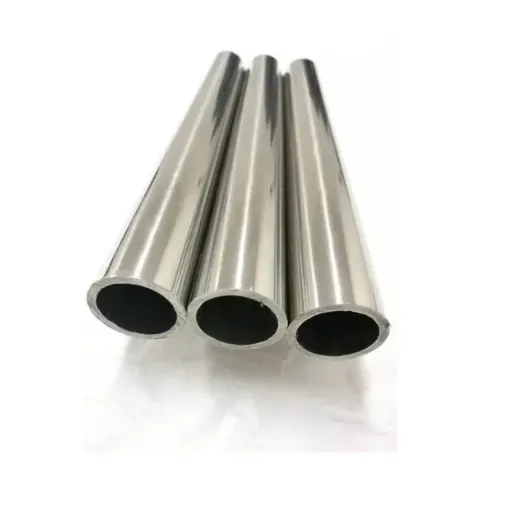
Surface finish is often overlooked, yet it controls how easily the pipe can be cleaned and how resistant it is to localized corrosion.
2B Finish
2B is the standard cold-rolled mill finish. It is smooth enough for many industrial chemical lines and is the most economical choice. It isn't ideal for systems that require frequent CIP (clean-in-place) cycles or high-purity fluid.
BA Finish
Bright annealed finish is smoother and more reflective than 2B. It improves cleanability and reduces friction losses in fluid flow. BA is common in food, pharmaceutical, and fine chemical systems.
EP Finish
Electropolishing removes surface imperfections and enriches the chromium layer at the surface. EP finish pipe is used in ultra-pure chemical distribution, semiconductor fabrication, and pharmaceutical water systems. It offers the highest cleanability and the best resistance to bacterial adhesion and chemical residue buildup.
Pickling and Passivation
Even the correct grade can underperform if the surface is contaminated during fabrication. Pickling removes weld scale and free iron, while passivation rebuilds the passive oxide layer. For chemical service, always specify that fabricated spools are pickled and passivated before installation.
Standards and Documentation to Require
Chemical plant engineers live by codes and certificates. The right paperwork protects both safety and warranty.
ASTM A312
ASTM A312 covers seamless, welded, and heavily cold-worked austenitic stainless steel pipe. It is the most common specification for 304, 304L, 316, and 316L process pipe. A compliant pipe will have defined chemical composition, mechanical properties, and dimensional tolerances. For detailed requirements, refer to the ASTM A312 standard.
For duplex grades, ASTM A790 or ASTM A928 are the relevant specifications. For high-temperature service, ASTM A358 may apply.
NACE MR0175 / ISO 15156
If the pipe will handle sour service containing hydrogen sulfide, specify compliance with NACE MR0175 / ISO 15156. This standard limits hardness and material conditions to reduce the risk of sulfide stress cracking.
Mill Test Certificate (MTC)
The MTC should confirm grade, heat number, chemical analysis, mechanical test results, and standard compliance. For critical chemical lines, the certificate should be traceable to the mill of origin. Our quality assurance page explains how we verify documentation before shipment.
A QA manager at a Southeast Asian petrochemical plant learned the value of traceability after a batch of imported pipe arrived with MTCs that did not match the heat numbers stamped on the material. Switching to an authorized distributor with direct mill relationships reduced documentation errors to zero over the following year.
Sourcing Stainless Steel Pipe for the Chemical Industry from China
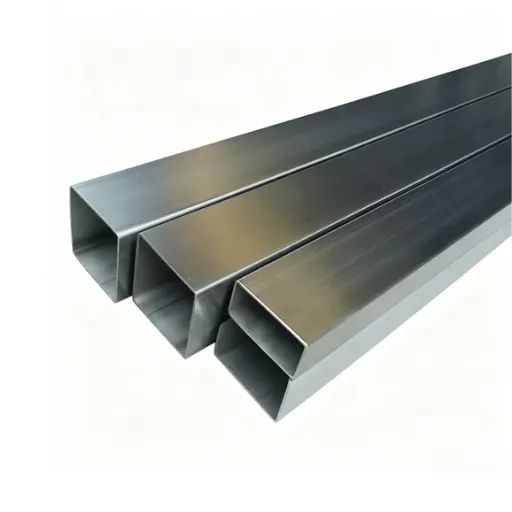
China produces a large share of global stainless steel, and Wuxi is one of the main distribution and processing hubs. Sourcing from an authorized distributor rather than a secondary trader reduces the risk of mixed grades, incorrect certificates, and inconsistent wall thickness.
Authorized Mill Partnerships
Look for suppliers that can name their mill partners and provide authorization letters. Wuxi Yansheng Technology sources stainless steel pipe through authorized partnerships with TISCO, Baosteel, JISCO, and Dongfang Special Steel. These relationships give buyers direct access to certified material with stable lead times. Learn more about our authorized mill partnerships.
Processing and Customization
Chemical projects often need pipe cut to length, beveled, or fabricated into spools. A supplier with an in-house processing center can control tolerances and surface protection through each step. We supply stainless steel pipe in standard and custom lengths, with optional polishing and end preparation.
Export Packaging and Logistics
Pipe must be packed to prevent contamination, mechanical damage, and moisture during sea freight. End caps, wooden crates, and VCI wrapping are common requirements. A Wuxi-based supplier with export experience can recommend packing and Incoterms that match your delivery needs.
If you need stainless steel pipe for the chemical industry, request a quote with your grade, size, quantity, and standard requirements. Our technical team can recommend the right material and finish for your process.
Common Mistakes When Specifying Chemical Pipe
Avoiding these errors can save both upfront cost and lifecycle maintenance.
Choosing 304 for chloride-bearing fluids because it is cheaper
Ignoring surface finish requirements for cleanable or high-purity systems
Accepting welded pipe for high-pressure service without checking seam quality
Skipping pickling and passivation after fabrication
Failing to verify that the MTC matches the heat number on the pipe
Specifying standard grades for sour service without NACE compliance
Each of these mistakes has caused real failures. The cheapest pipe is rarely the least expensive over the life of the plant.
Conclusion
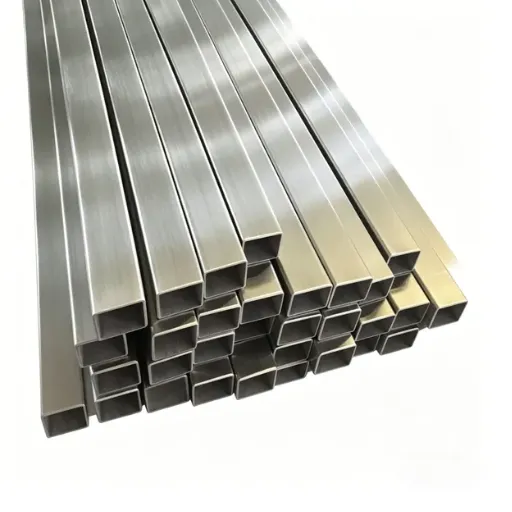
Specifying stainless steel pipe for the chemical industry means balancing corrosion resistance, pressure rating, cleanability, and total cost. Start with the process fluid and temperature, then choose the grade and finish that match. Require the right standards and traceable documentation. Finally, source from an authorized distributor that can support your project with processing, inspection, and export logistics.
Key takeaways:
Match the grade to the chemical environment; 316L is the baseline for chlorides and acids
Choose seamless pipe for high pressure and welded pipe for economy in lower-pressure lines
Specify BA or EP finishes when cleanability matters
Require ASTM A312 compliance and traceable MTCs
Consider NACE MR0175 / ISO 15156 for sour service
Work with authorized mill distributors to reduce material risk
Wuxi Yansheng Technology supplies certified 304, 316/L, 316Ti, and duplex stainless steel pipe for chemical industry projects. We support custom sizes, surface finishes, and export documentation from our Wuxi processing center.
Ready to specify pipe for your chemical project? Request a quote and our team will review your process conditions and recommend the right grade, schedule, and finish.
Recently Posted
-
Wear-Resistant Steel Plates for Mining Equipment: Chute Liners, Crusher Wear Parts & Excavator Bucke
September 14, 2026A copper mine in South America was replacing the liners in its primary transfer chute every ten weeks. Each liner set weighed roug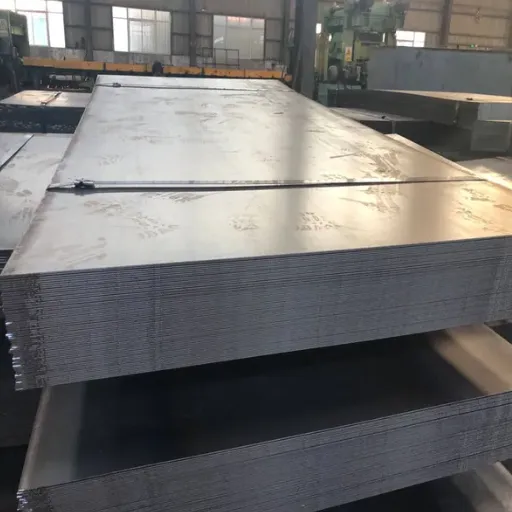 Read More
 -
Wear-Resistant Steel Plates: AR400, AR500, NM400, NM500 — Hardness & Service Life
September 14, 2026A quarry operator in Southeast Asia was replacing chute liners every six to eight weeks. The liners were cut from ordinary structu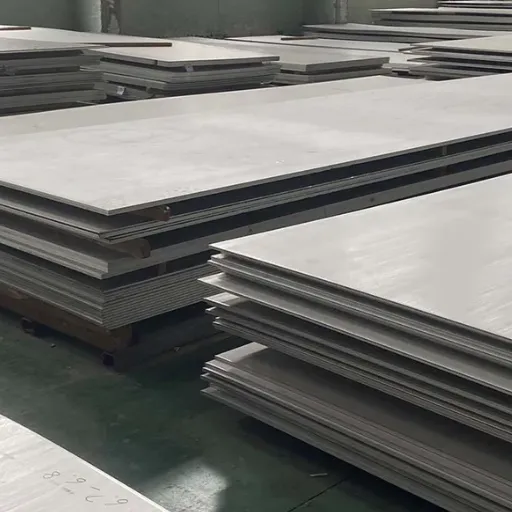 Read More
 -
AR400 vs AR500 vs NM500 Wear Plate: Hardness, Impact Toughness & Abrasion Resistance Trade-offs
September 14, 2026An equipment builder in South America standardized its truck bed liners on 500-grade wear plate because the harder material lasted Read More
 -
Wear-Resistant Steel Plate Sourcing: Hardness Verification, Microstructure Check & Import Compliance
September 14, 2026A distributor in the Middle East purchased 80 tons of plate described on the offer sheet as 500-grade wear-resistant steel. The pr Read More

Contact Us
Recommended Products
-
 EN 1.4006 410 Round Bar 15-150mm Martensitic Annealed Steam Turbine Blade BlankUS$ 1.5 - 1.8MOQ: 100 Kilograms
 -
Gas Distribution Lines Require C12200 Hard Temper Copper Pipe With Corrosion ResistanceUS$ 10 - 25MOQ: 100 Kilograms
-
DIN 1.4541 Stainless Sheet 4mm Pickled Finish Pipeline Pressure System Industrial Fabrication MaterialUS$ 1.6 - 2.6MOQ: 100 Kilograms
-
EN X6CrNiTi18-10 Stainless Plate 5mm Heat Exchanger Corrosion Resistant Industrial Equipment UseUS$ 1.75 - 2.5MOQ: 100 Kilograms
-
Copper Bonded Ground Rod 14.2mm x 2400mm Steel Core Earth Rod ASTM Standard for Electrical Grounding SystemUS$ 5 - 25MOQ: 100 Kilograms
-
DIN 1.4307 Stainless Steel Plate 5mm Pickled Finish Chemical Reactor Pressure Vessel Fabrication UseUS$ 1.85 - 4.15MOQ: 100 Kilograms
-
ASTM A276 416 Free-Machining Round Bar Dia 8-60mm Sulfurized High-Speed Auto-ScrewUS$ 1.65 - 1.85MOQ: 100 Kilograms
-
Nickel Alloy Strip Coil Tube Mill Feedstock Inconel 625 Incoloy 825 Welded Tube Raw MaterialUS$ 20 - 70MOQ: 100 Kilograms
-
JIS SUS329J4L Duplex Round Bar 25-80mm Chloride-Proof GCC Coastal InfrastructureUS$ 5.9 - 6.4MOQ: 100 Kilograms
-
JIS SUS303Se Round Bar Dia 8-50mm Selenium-Free-Cutting Auto-Lathe Optical HousingUS$ 3.6 - 3.9MOQ: 100 Kilograms
-
ASTM A564 630 17-4PH Round Bar Dia 20-100mm Condition H1025 Injection Mould InsertUS$ 4.9 - 5.4MOQ: 100 Kilograms
-
ASTM A276 304 Square Bar 6x6-100x100mm Cold Drawn Pickled Weld Frame ConstructionUS$ 1.65 - 2.85MOQ: 100 Kilograms
-
EN X2CrTi12 Stainless Plate 4mm Oxidation Resistant Vehicle Exhaust Industrial Fabrication UseUS$ 0.95 - 2.5MOQ: 100 Kilograms
-
Aluminium Round Tube Baby Crib Cot Bed Frame 6063 T5 Anodized Safety Diameter Wall Thickness FurnitureUS$ 2 - 5MOQ: 100 Kilograms
-
Welded Stainless Steel C Channel Bar 304 Grade Polished Surface for Architectural Decoration UseUS$ 1.65 - 2.85MOQ: 100 Kilograms
-
Round Aluminum Tubing Painting Easel Stand Leg 6063 T5 Anodized Lightweight Diameter Wall ThicknessUS$ 2 - 5MOQ: 100 Kilograms
-
Nickel Alloy Coil Strip Forging Billet Raw Material Inconel 718 Waspaloy Disc Forging StockUS$ 20 - 70MOQ: 100 Kilograms
-
Water Pump Motor Core Grade Non Oriented Silicon Steel Coil 50W470 Width 1000mm ASTM A683 StandardUS$ 0.5 - 1.5MOQ: 500 Kilograms
-
GOES Steel for Railway Electrification Transformer Networks 23Q110 High Efficiency Magnetic LaminationUS$ 0.5 - 4.5MOQ: 500 Kilograms
-
Silicon Steel for Wind Energy Power Conversion Transformers 30QG105 EN 10106 GOES Strip MaterialUS$ 0.5 - 4.5MOQ: 500 Kilograms